
Rodents in the Attic? Signs, Noises and Cleanup in Charlotte Homes
In Charlotte-area homes, rodents can reach attics through roofline gaps, soffit and fascia joints, damaged vents, utility openings, and branches that touch the house. Lasting removal pairs trapping and monitoring with sealing the entry points, since trapping alone leaves the route open. If urine or droppings have contaminated insulation, some or all of it may need removal. The inspection determines the cleanup needed.
As temperatures cool in the Charlotte area, rodents may seek sheltered places inside homes. An attic can offer cover, nesting material, and access to the rest of the structure. Scratching or scurrying sounds are often the first clue, but the time and sound alone cannot confirm which animal is present. Look for physical signs and have the attic inspected if you suspect activity.
This guide covers signs of activity, common entry points, how professional removal works, and what cleanup may involve. Carolina Pest serves homeowners in Charlotte and nearby North Carolina communities. For service options, see our page on Charlotte rodent control.
How do you know if rodents are in your attic?
Rodents are cautious and mostly active when you aren’t looking, so you’ll usually notice their signs before you see an animal.
“I look for droppings, nesting material, gnawing, and disturbed insulation. Those signs can help narrow down what may be in the attic and how widespread the activity is. Then I inspect travel paths and the roofline for possible entry points. No single sign tells the whole story, so I look at the attic and exterior together.”
Tim Berry, Carolina Pest, Wildlife Professional
Noises and what time you hear them
Scratching, scurrying, gnawing, and squeaking overhead are common first clues. When you hear them can offer a clue, but it cannot identify the animal on its own. For help sorting out the sounds, see our guide to identifying attic noises.
“Nighttime activity can be consistent with mice or rats, while daytime noise can point to a squirrel. Sound and timing are clues, not confirmation. I check for droppings, nesting material, damage, and entry points before identifying the animal.”
Tim Berry, Carolina Pest, Wildlife Professional
Droppings, trails and grease marks
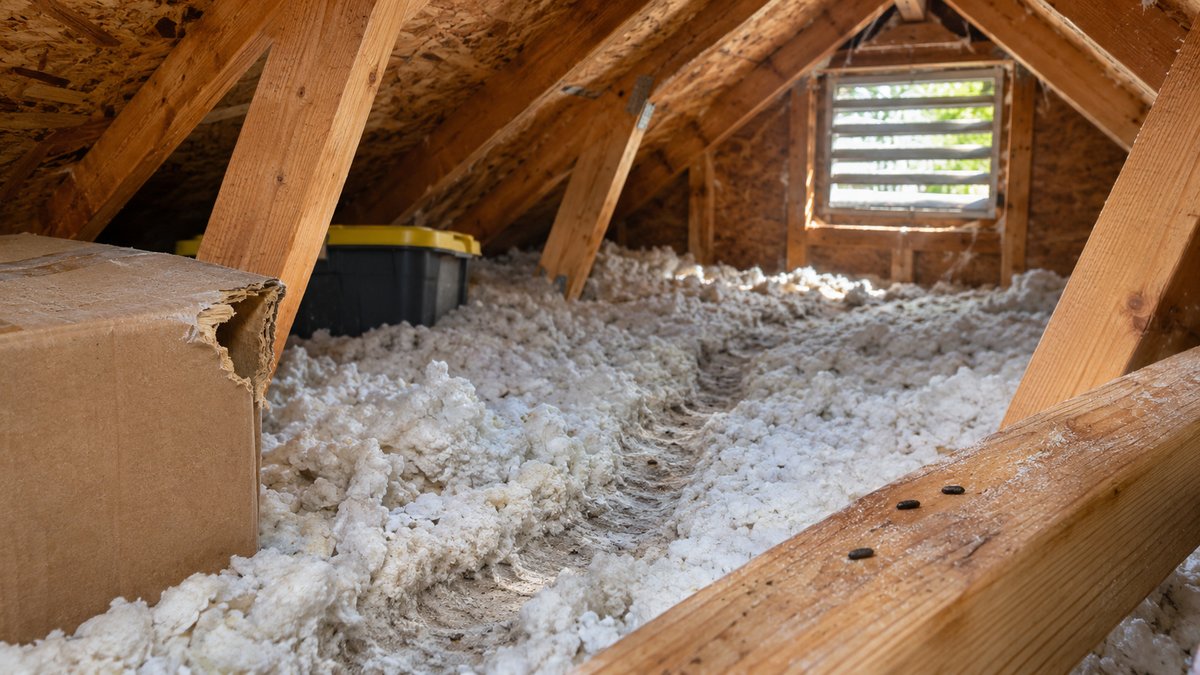
Look for droppings on top of insulation, along rafters, near the attic hatch, and around stored boxes. Rodents also travel the same paths again and again. Repeated travel may leave dark smudges along beams, pipes, or openings. You may also see flattened runways or tunnels through blown-in insulation.
Insulation and wiring damage
Rodents gnaw on materials in their environment. In attics, you may find:
- Chewed electrical wiring, which can create a fire hazard
- Torn or tunneled insulation and nesting piles
- Damaged HVAC ductwork and flex duct
- Odors associated with urine or nesting material
Key takeaway: Noises paired with droppings, gnawing, or disturbed insulation make rodent activity more likely, but an inspection is needed to confirm the source.
How do rodents get into an attic?
Attic entry routes vary by species and by home. Common access points include gaps around the roofline, damaged vents, and unsealed utility openings. Mice can fit through very small gaps, so even openings that look minor should be checked.
Common entry points on Charlotte-area homes include:
- Roofline gaps where the roof decking meets the fascia
- Soffit and fascia joints that have separated, rotted, or been chewed open
- Roof, ridge, and gable vents with damaged or missing screens
- Roof returns, where two rooflines meet and leave a hidden gap
- Plumbing vent stacks and other roof penetrations without proper collars
- Tree limbs and utility lines that act as a bridge to the roof
Tree limbs that touch or overhang a Charlotte-area roof can give climbing animals access to roof edges. Weather and wear can also damage soffits and fascia, leaving openings that are hard to see from the ground.
Key takeaway: Include the roofline, vents, utility openings, and nearby tree access in an inspection.
Mice, rats or squirrels? What the signs tell you
The signs differ by species, and the species shapes the plan. Squirrels, for example, are wildlife and may require a different handling approach from mice and rats. If squirrels or other animals are involved, our team also provides wildlife and animal removal. For squirrel-specific signs, see our guide to squirrels in the attic.
| Sign | House mice | Roof rats | Norway rats | Gray squirrels |
|---|---|---|---|---|
| Activity clue | Usually most active at night | Often active at night; commonly use elevated routes | Often active at night; may use lower levels too | Generally active during daylight |
| Sound clue | Light scratching or quick movement | Scratching or scurrying in ceilings and roof spaces | Heavier movement may be heard in lower areas | May make louder running or thumping sounds |
| Other signs | Small droppings, nesting material, gnawing | Droppings, grease marks, gnawing near roofline access | Droppings and gnawing near lower-level access | Chewed soffits or vents, nesting material |
| Common access | Small gaps, utility openings, roofline gaps | Roofline gaps, vents, branches, utility lines | Foundation or lower-level gaps, pipes, utility openings | Damaged soffits, vents, roofline openings |
Key takeaway: Noise, droppings, damage, and entry points can help identify the animal, but a technician should confirm the source.
What does attic rodent removal involve?
A thorough plan addresses the animals inside and the routes they used to enter. The exact sequence depends on the species, access points, and extent of activity.
Inspection
A service inspects the attic and the exterior, from the roofline and soffits to vents, penetrations, and nearby trees. The goal is to identify the species, assess how widespread the activity is, and find the entry points.
Exclusion and sealing
Exclusion means closing the gaps rodents use with materials suited to the opening and the animal. A technician should select the repair method after identifying the entry point. Sealing access is an important part of reducing the chance of new animals entering. For a closer look at what rodent exclusion involves in Charlotte-area homes, see our exclusion guide.
“Trapping removes animals that are already inside, but it does not close the openings they used. If those openings remain, other rodents may enter. That is why the inspection and exclusion steps matter alongside trapping and follow-up monitoring.”
Tim Berry, Carolina Pest, Wildlife Professional
Trapping and monitoring
Traps may be placed along identified travel routes, then checked and adjusted during follow-up visits. The placement and monitoring plan should fit the species and the structure.
Cleanup and insulation
After rodent activity is addressed, the cleanup plan depends on the type and extent of contamination. Droppings, urine, nests, and affected insulation may require careful cleanup or removal. A qualified professional should explain which cleanup and restoration steps are included in the estimate.
Hearing scratching overhead? Request an attic inspection so a service professional can assess the signs, check likely entry points, and explain the options.
Do you have to replace insulation after rodents?
Not always. The decision depends on where contamination is found, how extensive it is, and the condition of the insulation. A professional inspection can help determine whether localized cleanup is appropriate or whether some insulation should be removed and replaced.
“Whether insulation needs removal depends on the extent and location of contamination and the material involved. If affected areas are limited, the inspection may support a smaller cleanup. If droppings, urine, or nesting material are widespread, removal may be appropriate. We assess the attic before recommending what to remove or replace.”
Tim Berry, Carolina Pest, Wildlife Professional
Do not sweep or vacuum dry rodent droppings. The CDC guidance for cleaning up after rodents explains safer cleanup steps and recommends bagging contaminated insulation for removal.
Key takeaway: Insulation does not automatically need replacement after every rodent sighting. The inspection should document the extent of contamination and explain the cleanup recommendation.
How long does it take?
There is no single timeline for attic rodent removal. It depends on the species, the number of entry points, follow-up monitoring, and whether cleanup or insulation work is needed. A technician should give a schedule after inspecting the home.
How do you keep rodents out of the attic?
Lasting protection comes from keeping entry points sealed and making your property less inviting.
- Trim tree limbs so they do not touch or overhang the roof
- Have your roofline, soffits, and vents checked each fall
- Repair damaged soffits and fascia promptly after storms
- Store birdseed, pet food, and grass seed in sealed containers
- Keep firewood and clutter away from the house
- Schedule regular inspections to catch new gaps early
Common mistake: Treating trapping as the entire solution. Traps address animals already inside, while inspection and exclusion address the routes that may allow new animals to enter.
Frequently asked questions
How do you know if there are rodents in your attic?
Common signs include scratching or scurrying noises at night, droppings on insulation or rafters, and dark grease marks along beams. You may also notice chewed wiring, tunnels in the insulation, or a musty odor. Daytime noises can be consistent with squirrel activity, but sound and timing alone are not enough to identify the animal.
How do rodents get into an attic?
Rodents usually enter through gaps along the roofline, separated soffit and fascia joints, damaged vents, and unsealed roof penetrations. Tree limbs and utility lines that touch the house give them a path to the roof. Mice can fit through openings about a quarter inch wide, so small gaps should not be dismissed.
What does rodent removal from an attic involve?
A professional plan may include inspection, exclusion, trapping, follow-up monitoring, and cleanup. The appropriate steps depend on the species and the findings. Contaminated insulation may need removal and replacement.
Do you have to replace insulation after a rodent infestation?
Not always. The decision depends on the extent and location of contamination and the insulation’s condition. Some situations may call for localized cleanup; more extensive contamination may require removal and replacement.
Why do rodents come back after trapping?
Trapping removes the rodents inside but leaves the entry points open. If entry points remain open, other rodents may enter later. Inspection and appropriate exclusion help reduce that risk.
Rodents may use roofline gaps and other openings to reach an attic, where they can damage insulation, wiring, or stored items. A lasting plan identifies the animal, addresses entry points, and determines whether trapping, cleanup, or insulation work is needed.
If you hear noises overhead or find signs of activity, contact Carolina Pest to ask about an attic inspection and next steps, or learn more about how our rodent control team approaches inspection, removal, and prevention.
Prefer to talk? Call Carolina Pest at (704) 283-1527.
About the contributors
Author: Tim Rodgers, Region 2 Area Technical Leader, Carolina Pest
Tim Rodgers serves as Region 2 Area Technical Leader for Carolina Pest. With extensive field experience and technical expertise, he supports teammates through training, coaching, and problem-solving guidance. Tim is dedicated to helping teams provide effective pest management solutions and extraordinary service for customers throughout the region.
Reviewed by: Cory Goeltzenleuchter, B.C.E., P.H.E., Director of Technical Services, Carolina Pest
Cory Goeltzenleuchter, B.C.E., P.H.E., is the Director of Technical Services for Carolina Pest. As a Board Certified Entomologist and Public Health Entomologist, Cory is one of the organization’s leading technical experts in pest management. He oversees technical training, service standards, and industry best practices while helping ensure customers receive extraordinary service through science-based solutions, ongoing education, and innovative approaches across Carolina Pest.