
How to Keep Rodents Out of Your Charlotte Home This Fall
Quick answer: Rodent exclusion keeps mice and rats out by finding and sealing the small gaps they use to enter a home. In Charlotte and Monroe, early fall is the best time to inspect utility openings, vents, garage doors, crawl spaces and rooflines before cooler weather drives rodents indoors. Traps address rodents already inside, while exclusion helps prevent them from returning.
Hearing scratching in a wall or finding droppings near stored food can leave you wondering where rodents entered and whether a few traps will solve the problem. Because mice can squeeze through a gap about the width of a pencil, the opening is often much smaller than homeowners expect.
This guide explains how rodent exclusion works, where mice and rats commonly enter Charlotte-area homes, what professional service involves, and when to schedule an inspection before fall activity becomes a winter infestation.
Why Fall Is the Deadline in North Carolina
Mice and rats stay active throughout the year. When nights begin cooling across the Piedmont in late September and October, homes offer steady warmth, food, water and protected nesting areas. Rodents often move through a crawl space, garage or attic before homeowners ever see one in a living area.
Timing matters because rodents reproduce quickly once they find shelter. A small problem in early fall can become a larger infestation by winter, especially when nesting sites are close to stored food or insulation. Completing rodent exclusion before animals enter is usually cleaner and less disruptive than trapping them after droppings, nesting material or damage appear.
For Charlotte and Monroe homeowners, early fall is a practical time to inspect the exterior, repair worn seals and schedule professional help for openings that are difficult to reach. Waiting for scratching sounds means the first step may need to be removal rather than prevention.
How Mice and Rats Get Into Charlotte Area Homes
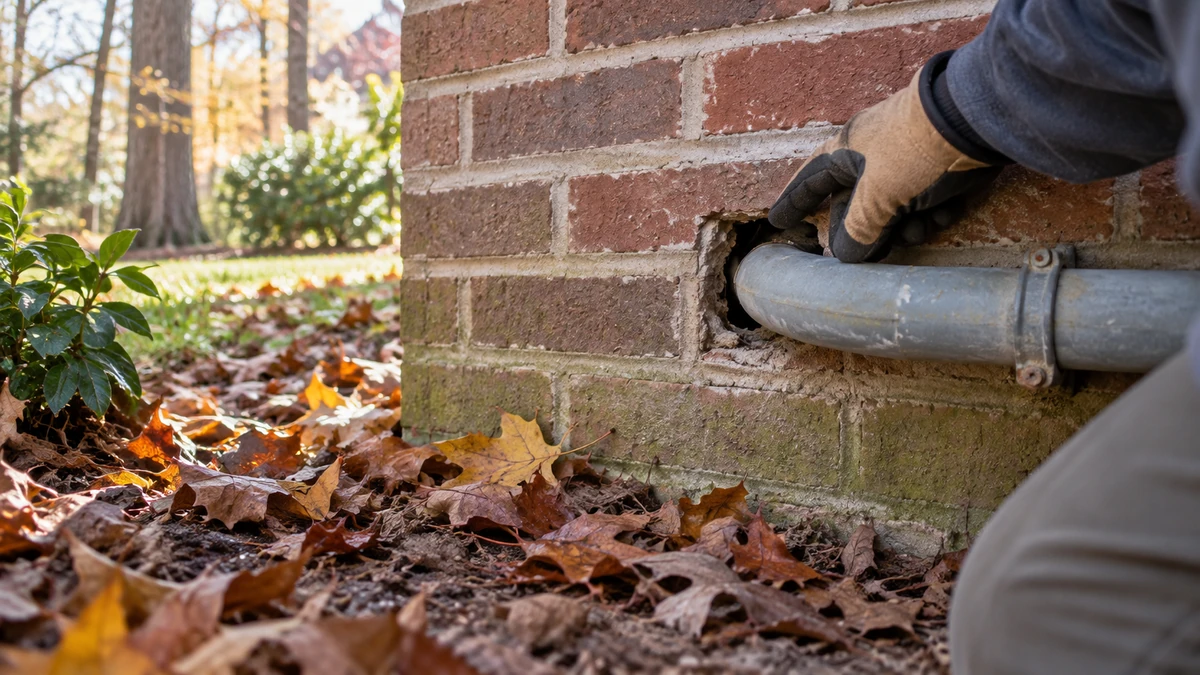
Rodents do not need an obvious hole. Mice can squeeze through openings around 1/4 inch wide, while rats can use gaps around 1/2 inch. The most important part of an inspection is tracing small exterior defects to the protected spaces behind them.
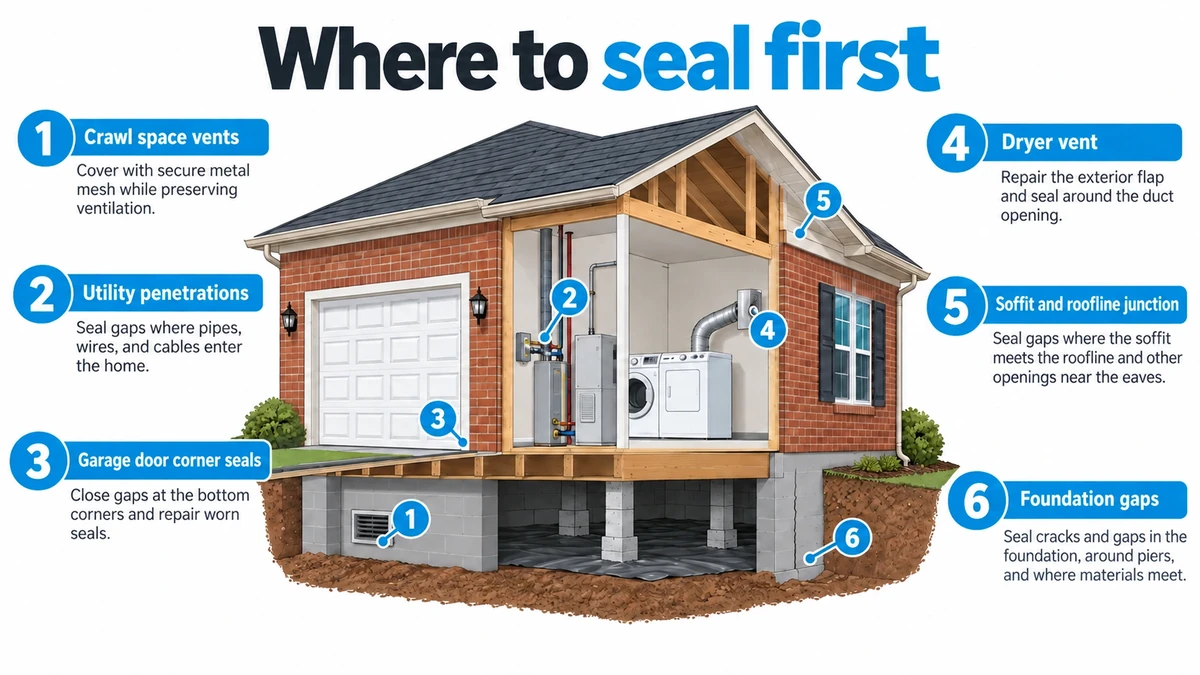
- Utility and plumbing penetrations. Mice can use gaps around 1/4 inch where water lines, refrigerant lines, cables or conduit pass through siding, brick or foundation walls. These openings often lead directly into wall voids, cabinets or crawl spaces.
- Dryer and bathroom vents. A damaged flap, missing screen or gap around the vent hood can leave a mouse-sized opening. Any screening must allow the vent to function safely and must match the appliance and building requirements.
- Brick veneer weep holes. Weep holes are intentional drainage openings and should not be packed shut. On brick homes around Charlotte and Monroe, approved pest-resistant inserts can help limit access while preserving airflow and drainage.
- Foundation vents and crawl space doors. Loose covers, rusted screens and warped access doors create entry points close to warmth, plumbing and insulation. A 1/4-inch defect can be enough for mice, while larger damaged sections may also admit rats or wildlife.
- Garage door corners and weather seals. Rodents often enter where the bottom seal meets the side track. Daylight visible under a closed door usually signals a gap that deserves attention, especially when pet food, birdseed or stored goods are nearby.
- Rooflines and soffits. Gaps where fascia, soffits and roof edges meet can give climbing rodents access to the attic. Older soffit lines, storm damage and repairs completed with mismatched materials can leave concealed openings.
- Chimney caps and attic gable vents. Missing screens, damaged louvers or openings larger than 1/4 inch can create attic access. These locations also attract squirrels and other wildlife, so accurate identification matters before anything is sealed.
What Professional Rodent Exclusion Involves
A professional service should connect the evidence indoors with the openings outside. Carolina Pest begins its Charlotte rodent control process with an interior and exterior inspection, including likely entry points and nesting areas. A complete exclusion plan generally includes the following steps.
- Inspection and entry point mapping. The service professional checks the roofline, vents, doors, foundation, crawl space and utility penetrations. Indoors, droppings, rub marks, nesting material and damage help show where rodents are traveling.
- Rodent-resistant repairs. Openings are sealed with materials suited to the location, such as copper mesh, hardware cloth, sheet metal and durable sealant. Expanding foam alone is easy for rodents to gnaw and should not be treated as a permanent repair.
- Removal of rodents already inside. Traps or another approved control method may be needed before the structure is fully sealed. Closing every exit while animals remain indoors can create odor, damage and new escape holes.
- Verification and follow-up. A follow-up visit checks activity, removes or services devices and confirms that repaired areas have held. New gaps or building repairs may require additional attention over time.
Rodent Exclusion and Rodent Control
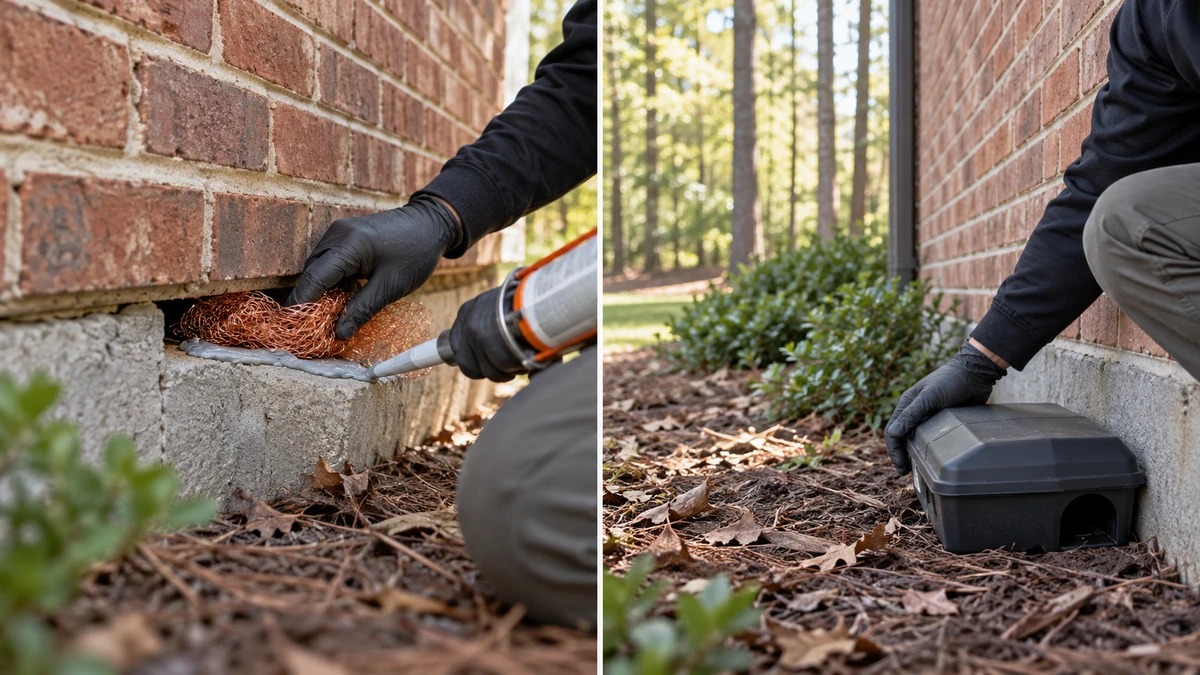
Rodent control. Removes or manages mice and rats already present. Used alone, new rodents may enter through the same openings.
Rodent exclusion. Seals entry points to prevent access and reinfestation. Used alone, rodents already inside may be trapped in the structure.
The strongest plan uses both services in the correct order. Control addresses current activity. Exclusion closes the routes that allowed the activity to begin.
Signs You May Already Have Rodents
You may never see a mouse or rat during the day. Look and listen for evidence along the routes they use after dark.
- Droppings along walls, inside cabinets, behind appliances or near stored food
- Small gnaw marks on food packaging, wood, plastic or electrical wiring
- Scratching, scurrying or light tapping inside walls or above ceilings, especially around dusk or dawn
- Dark, greasy rub marks where rodents repeatedly travel along walls and baseboards
- Shredded paper, fabric or disturbed insulation used as nesting material
- A stale or musky odor in enclosed spaces
If you notice these warning signs, schedule professional rat and mouse control before the infestation spreads or causes additional damage.
Mice in Walls and Mice in the Attic
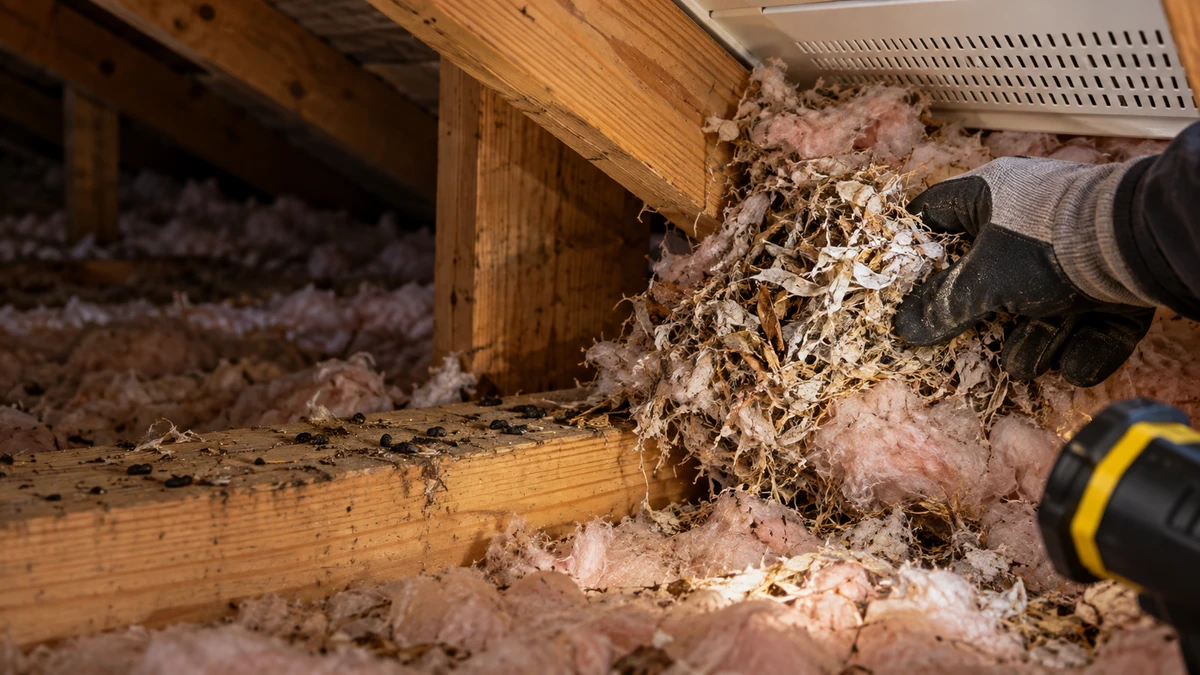
Light scratching inside a wall, especially near a kitchen or utility line, may point to mice using wall voids as travel routes. Noises overhead can also come from mice, but the timing and weight of the sound matter. Quick, light movement at night is consistent with mice or rats. Heavier movement, rolling sounds or activity during the day may indicate squirrels or another animal.
Rodent removal from attic spaces is its own job, because insulation hides both the animals and the damage. Nesting material, droppings and chewed wiring are usually spread across the attic rather than concentrated in one spot, so removal, cleanup and sealing have to be planned together.
If the noise is concentrated overhead and sounds larger than a mouse, schedule an inspection before sealing the opening. Carolina Pest also provides wildlife control for attic activity when the source turns out to be a squirrel, raccoon or another wildlife species.
What Rodent Control and Exclusion Cost
Carolina Pest currently lists Charlotte rodent control at approximately $150 to $500 after inspection. That published range applies to rodent control and should not be presented as a guaranteed price for complete exclusion. The price of sealing a home depends on the building and the amount of repair work required. A professional rodent inspection and treatment estimate is the most accurate way to determine the total.
The main cost factors include:
- Home size and the time required to inspect the full exterior
- Foundation type, including crawl space access versus slab construction
- The number, size and location of entry points
- Roofline, chimney or soffit repairs that require specialized access
- Whether trapping, follow-up visits, cleanup or damaged insulation must be addressed
- The materials needed for durable, rodent-resistant repairs
Exclusion can also prevent larger repair bills. Established rodents may contaminate insulation, damage stored items and chew wiring. A low-cost temporary patch is not a savings if rodents reopen it or remain trapped inside.
What You Can Do Yourself
Homeowners can reduce the conditions that attract rodents and correct simple maintenance problems. These steps are especially useful before fall activity increases.
- Store pantry goods and pet food in containers with tight-fitting lids.
- Clean crumbs and spills behind appliances and keep trash cans closed.
- Move firewood, birdseed and bulk pet food away from the exterior wall.
- Trim branches and vines away from the roofline and repair damaged screens.
- Replace worn door sweeps and keep the garage door closed when it is not in use.
- Check crawl space doors, foundation vents and utility openings for visible gaps.
What You Should Avoid
Do not rely on expanding foam by itself for rodent proofing. Do not scatter poison bait in an occupied home or attic, where placement can create risks and a dead rodent may become inaccessible. Most importantly, do not seal suspected entry points until you know whether animals are still inside.
For basic safety guidance, the CDC recommends sealing holes inside and outside the home while also trapping rodents to help prevent continued infestation. A professional can select materials and sequence the work based on the actual entry routes.
Effective Ways to Get Rid of Rodents in Charlotte Homes
For Charlotte homeowners, the most effective approach is an ordered process that removes the current infestation and prevents another one.
- Confirm the activity. Look for droppings, gnaw marks, nesting material and the location and timing of noises.
- Remove food and water sources. Secure pantry goods and pet food, clean crumbs and repair leaks.
- Inspect the full structure. Check utility lines, vents, crawl spaces, garage doors, soffits and the roofline.
- Remove rodents already inside. Use correctly placed traps or another professionally recommended control method.
- Seal every confirmed entry point. Use metal mesh, hardware cloth, sheet metal and durable sealants suited to each opening.
- Verify the results. Monitor for new droppings or sounds and recheck repairs after the control phase.
Rodent Exclusion in Charlotte and Monroe
Charlotte and Monroe include a mix of brick veneer homes, crawl space construction, attached garages and older roof and soffit lines. Each style creates different inspection priorities. Brick weep holes must keep draining, crawl spaces need intact vents and access doors, and roof repairs must withstand weather as well as rodent pressure.
Carolina Pest has served Charlotte-area homeowners since 1939. That local experience helps service professionals recognize the construction details and seasonal conditions that commonly lead to rodent activity across Charlotte and Monroe.
A local fall inspection should cover the structure from the foundation to the roofline. It should also account for current activity before repairs begin. Scheduling before the first sustained cold weather gives homeowners more opportunity to address small openings before rodents settle into insulation, walls or stored belongings.
“Start with the smallest exterior gaps and follow the evidence indoors. Utility penetrations, garage door corners, crawl space access points and roofline openings are the ones people walk past, so a complete inspection has to connect each potential entry point with the signs of activity inside the home.”
Tim Rodgers, Region 2 Area Technical Leader
Bed bugs travel on a different calendar and are not seasonal at all, which catches homeowners out in the fall. If the marks you are seeing are on skin rather than in the attic, our guide to bed bug bites vs mosquito bites walks through how to tell them apart.
Frequently Asked Questions
How small a gap can a mouse get through?
A mouse can fit through an opening about 1/4 inch wide, roughly the width of a pencil. That is why rodent exclusion must address small gaps around utility lines, vents, doors, crawl spaces and rooflines. If light or airflow passes through an exterior gap, it deserves a closer look.
What is the difference between rodent exclusion and rodent control?
Rodent control removes or manages mice and rats already inside a home. Rodent exclusion seals the openings they use to enter. Control without exclusion can allow another infestation, while exclusion without first clearing active rodents can trap animals inside walls, crawl spaces or attics.
How much does rodent exclusion cost?
The price depends on home size, foundation type, the number and location of entry points, repair materials, access needs and whether trapping or cleanup is required. Carolina Pest publishes a $150 to $500 range for Charlotte rodent control, but full exclusion requires an inspection and customized estimate.
When should I rodent proof my house in North Carolina?
Schedule rodent proofing in late summer or early fall, before cooler Piedmont nights push mice and rats toward indoor shelter. September and October are practical months for inspection and sealing. If you already hear scratching or find droppings, removal should be coordinated with exclusion.
Is the scratching in my attic mice or something bigger?
Fast, light scratching at night may indicate mice or rats. Heavier movement, rolling noises or daytime activity can point to squirrels or other wildlife. Because the repair plan depends on the animal and its exit route, an attic inspection should come before the opening is sealed.
Will sealing my house trap rodents inside?
It can if active rodents are present and every exit is closed too soon. A professional plan identifies current activity, removes the animals and then completes exclusion in the correct sequence. Follow-up monitoring confirms that activity has stopped and the repaired entry points remain secure.
Schedule a Fall Rodent Inspection
Fall is the window to protect your home before the first cold snap sends mice and rats looking for shelter. Seal your Charlotte or Monroe home before rodents settle into walls, crawl spaces or attic insulation.
Schedule a free inspection and quote with Carolina Pest and talk with a local service professional about rodent exclusion and control for your home.
About the Author
Tim Rodgers serves as Region 2 Area Technical Leader for Carolina Pest. With extensive field experience and technical expertise, he supports teammates through training, coaching and problem-solving guidance. Tim is dedicated to helping teams provide effective pest management solutions and extraordinary service for customers throughout the region.
Reviewed By
Cory Goeltzenleuchter, B.C.E., P.H.E., CP-FS, is a Board Certified Entomologist and Public Health Entomologist who serves as Director of Technical Services for Carolina Pest. He oversees technical training, service standards and industry best practices, helping ensure that customers receive extraordinary service through science-based solutions, ongoing education and innovative approaches across the service area.