

Bed Bug Bites vs Mosquito Bites: How to Tell Them Apart
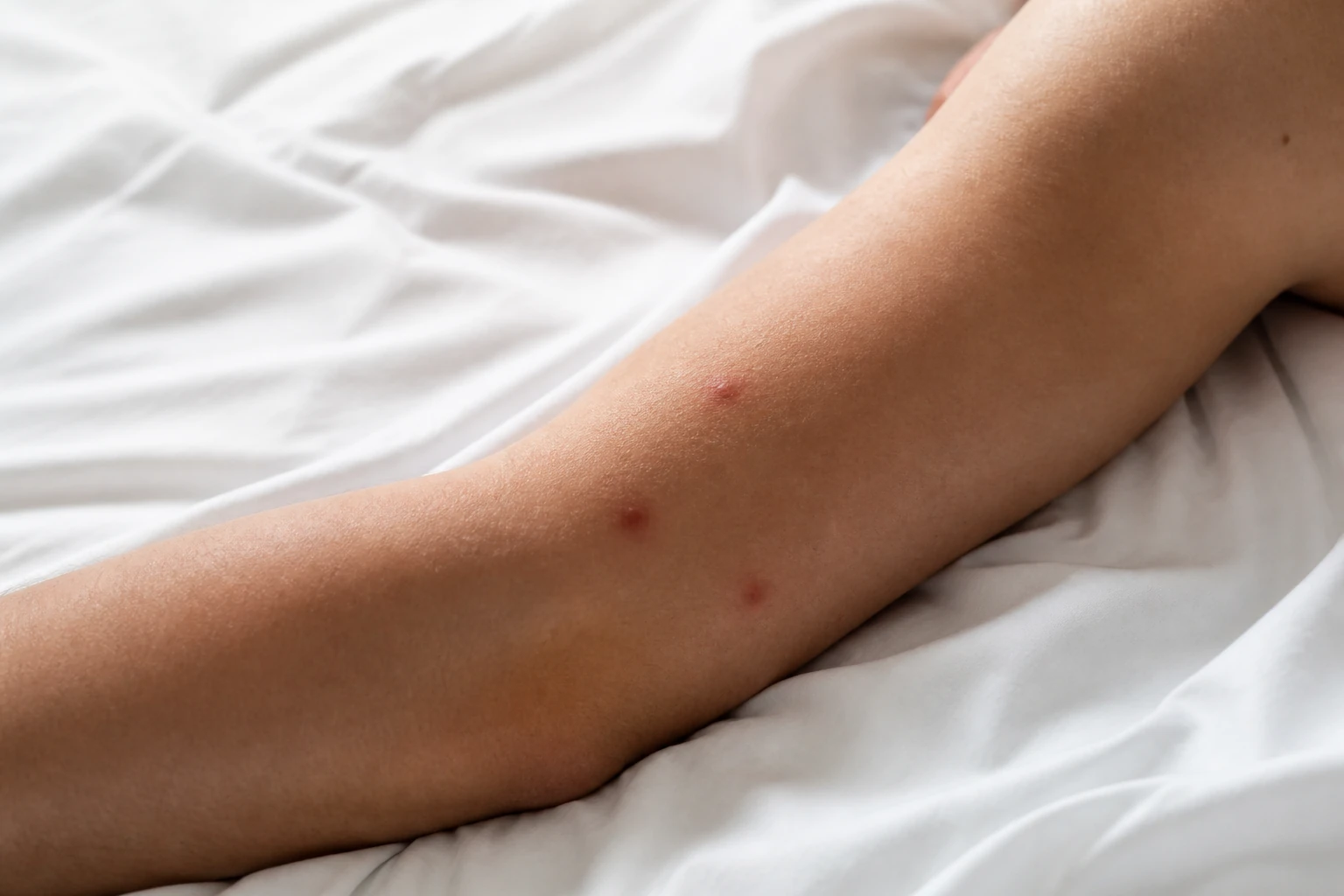
Quick answer: Bed bug bites usually appear in tight clusters or lines on skin that was exposed during sleep, often on the torso, arms, or neck, and they show up hours after the bite. Mosquito bites appear as single raised welts almost immediately, anywhere on exposed skin. Pattern, timing, and location are the most reliable ways to tell them apart at home.
Waking up with mysterious red marks is unsettling, and the first question most people ask is whether the bites came from bed bugs or mosquitoes. The answer matters more than it might seem. Bed bugs signal an active infestation that will not resolve on its own. Mosquitoes point to conditions in or around your yard that need attention, both for comfort and for the health risks mosquitoes carry in North Carolina.
This guide walks through exactly how to tell bed bug bites from mosquito bites, how to treat both, and what to do if the bites keep coming back.
The Short Answer: Quick Differences Between Bed Bug and Mosquito Bites
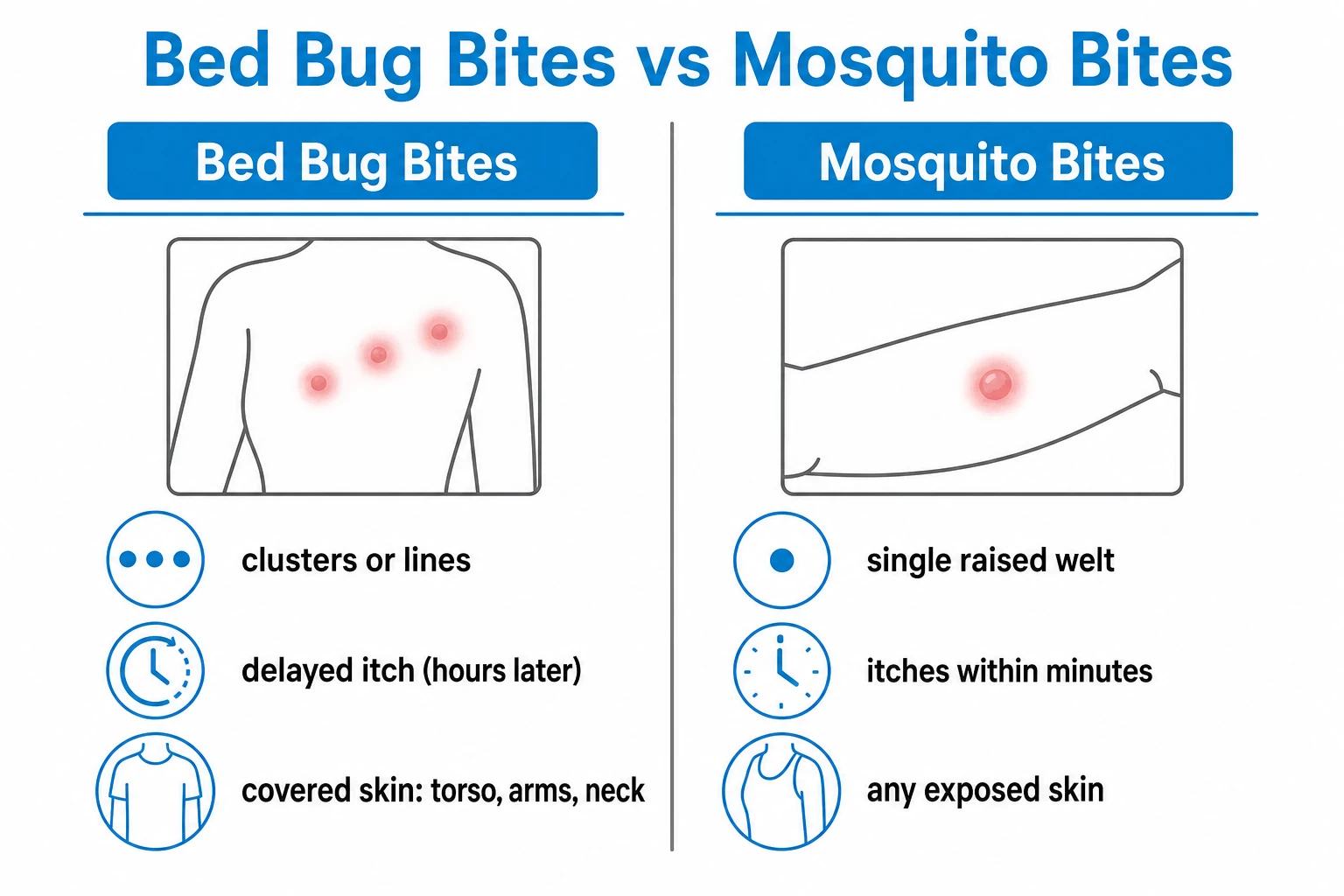
The fastest way to tell the two apart comes down to three questions: When did the bites appear? Where are they on your body? And what pattern do they follow?
Mosquito bites show up within minutes, appear as a single raised welt with a puncture mark at the center, and occur on any skin that was exposed outdoors. Bed bug bites take hours to develop, come in clusters or zigzag lines (sometimes called the “breakfast, lunch, and dinner” grouping), and appear on skin that was covered or exposed during sleep, often the shoulders, neck, arms, or torso.
Neither bite is immediately painful. Both cause itching. Both produce a raised, reddish bump. The key differences lie in pattern and circumstance, not appearance alone.
What Bed Bug Bites Look and Feel Like
Bed bug bites are small, flat or raised red welts that often appear in a distinctive clustered or linear pattern. The cluster develops because a single bed bug typically feeds multiple times along the same path before retreating. This produces the telltale row of three to five bites that most pest professionals use as a primary visual indicator.
A few characteristics are specific to bed bug bites:
- Delayed reaction. Bites often do not appear until 24 to 48 hours after feeding. Many people assume the bites came from somewhere else because there is no immediate sign at the time of contact.
- Location on the body. Bed bugs feed on exposed or lightly covered skin during sleep. Common spots include the neck, shoulders, arms, and the torso around the waistline.
- Timing relative to sleep. If bites appear consistently after waking, that pattern is a meaningful signal.
- Itching without a clear cause. Unlike mosquito bites, which are usually tied to a specific outdoor event, bed bug bites recur night after night without any obvious reason.
Some people have no visible reaction to bed bug bites at all. Others develop significant swelling, blistering, or a raised hive-like welt. Reaction severity varies considerably from person to person, which is one reason bed bug infestations often go undetected for weeks or months.
“The biggest mistake is assuming the bite itself tells you what pest caused it. We look at the pattern, where the bites are showing up, when they are happening, and whether there is physical evidence in the home before confirming bed bugs.”
Carolina Pest Management Team
If you are seeing bites alongside other signs, such as small rust-colored stains on bedding, shed exoskeletons, or a faint musty odor near the mattress, the case for bed bugs becomes much stronger. A professional inspection is the only way to confirm an infestation with certainty. Contact Carolina Pest for a free inspection if any of those secondary signs are present.
What Mosquito Bites Look and Feel Like
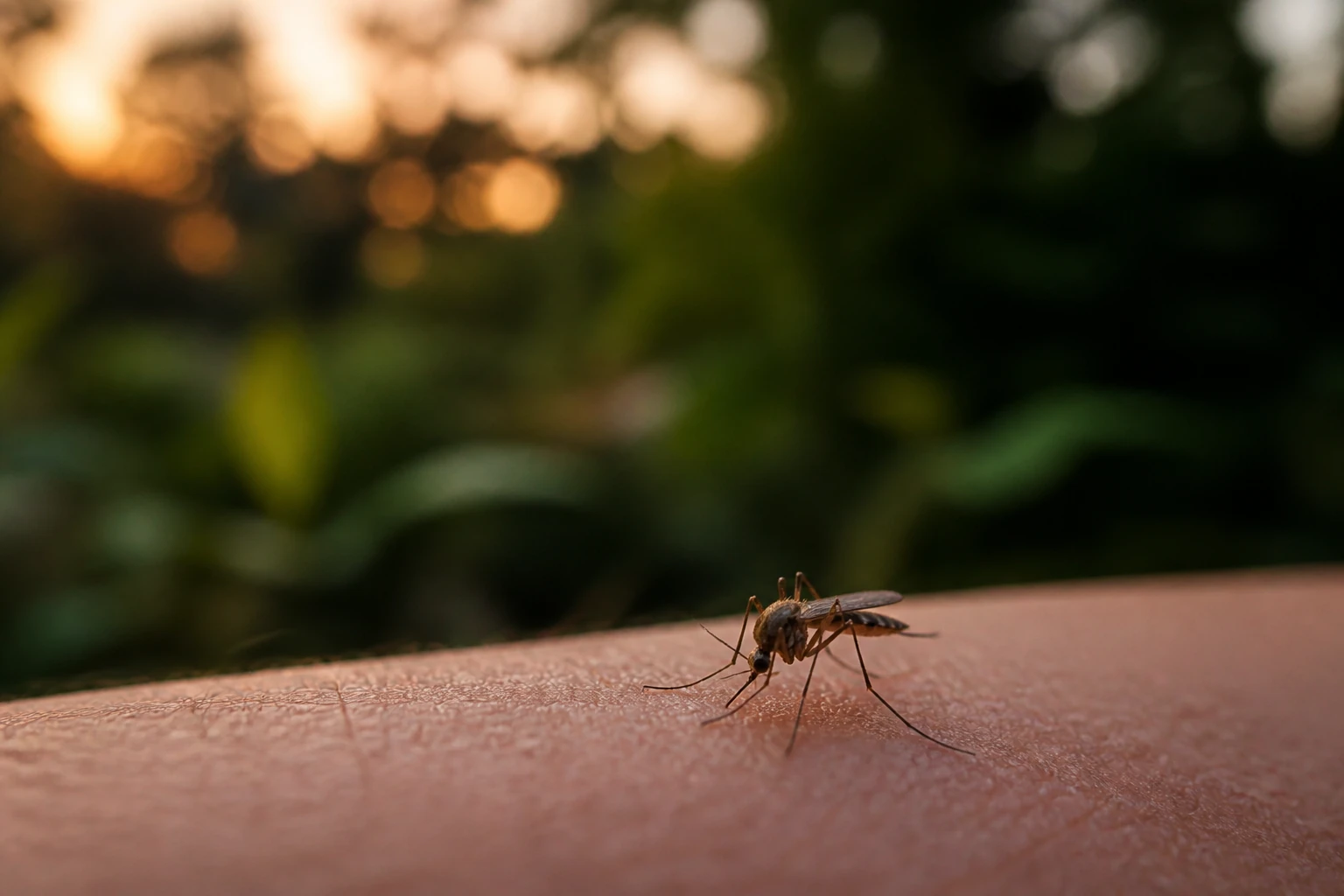
Mosquito bites are round, raised welts that form within minutes of contact. Most people feel the itch before they even notice the bite has formed. The welt is typically soft and puffy at first, then settles into a firmer, slightly raised red bump over the following hour.
Key characteristics of mosquito bites:
- Immediate onset. Unlike bed bug bites, mosquito bites produce a visible, itchy reaction within about 20 minutes. If you noticed the itch outdoors or shortly after coming inside, mosquitoes are the likely cause.
- Random location. Mosquitoes land wherever skin is exposed. Bites appear on ankles, arms, legs, face, and neck, any uncovered area.
- Single bites, not clusters. A single mosquito may bite more than once during a feeding attempt, but the bites will be scattered rather than arranged in a tight row.
- Tied to outdoor exposure. Mosquito bites almost always correlate with time spent outside, especially around dawn or dusk when most mosquito species in the Charlotte and Piedmont NC region are most active.
The CDC notes that mosquito bites in the United States are typically more of a nuisance than a medical emergency for healthy adults, though some species in North Carolina do carry and transmit viruses such as West Nile. People with severe allergic reactions to mosquito bites, a condition sometimes called Skeeter Syndrome, may experience pronounced swelling and need medical attention.
Side-by-Side Comparison: Bed Bug Bites vs Mosquito Bites
| Feature | Bed Bug Bites | Mosquito Bites |
|---|---|---|
| When bites appear | Hours to days after feeding | Within minutes |
| Pattern | Clusters or lines (3 to 5 bites) | Random, single bites |
| Common locations | Neck, shoulders, arms, torso | Any exposed skin |
| Associated with | Sleep, indoor environments | Outdoor exposure |
| Itching onset | Delayed | Immediate |
| Visible mark | Flat or raised red welt | Raised, soft welt with central puncture |
| Recurs nightly | Yes, if the infestation is active | No |
| Can confirm without the pest | No, inspection needed | Usually yes |
One important caveat: bites alone cannot definitively confirm a bed bug infestation. Bite appearance varies depending on individual immune response, and several other insects, including fleas, mites, and certain biting flies, produce bites that look similar. Physical evidence from an inspection is the only reliable confirmation.
“We often hear from homeowners who are convinced they have bed bugs based on bites alone, but several other pests can cause very similar reactions. That is why an inspection is so important. The bites may point us in a direction, but the physical evidence is what confirms the source.”
Carolina Pest Management Team
How to Treat Each Bite
Neither bed bug bites nor mosquito bites typically require medical treatment in otherwise healthy adults. The goal is symptom relief, mainly reducing itching and preventing secondary infection from scratching.
For bed bug bites:
- Wash the affected area with soap and water to reduce contamination risk.
- Apply a cold compress for 10 to 15 minutes to reduce swelling and numb the itch.
- Use an over-the-counter hydrocortisone cream (1 percent) to calm inflammation.
- Oral antihistamines such as diphenhydramine (Benadryl) or cetirizine (Zyrtec) can reduce the itch response, particularly at night when itching tends to worsen.
- Avoid scratching to keep from breaking the skin and introducing bacteria.
For mosquito bites:
- Clean the bite area and apply a cold pack immediately after being bitten.
- Over-the-counter calamine lotion, hydrocortisone cream, or antihistamine creams help control itching.
- Oral antihistamines are effective for people with stronger reactions.
- If a bite develops unusual swelling, spreading redness, warmth, or streaking, which are signs of a secondary bacterial infection, consult a healthcare provider.
For both types of bites, the same principle applies. Treating the bites addresses the symptom. It does not address the source. If bites recur, that is a signal to investigate the environment, not simply reapply cream.
How to Prevent Both Bed Bug Bites and Mosquito Bites
Prevention differs significantly between the two, because the sources are completely different.
Preventing bed bug bites:
- Inspect hotel mattresses, bed frames, and upholstered headboards when traveling. Check seams and corners for rust-colored staining or shed skins.
- Use hard-sided luggage when possible, and keep bags off the floor and bed in hotel rooms.
- After returning from travel, wash and dry all clothing on high heat before storing it.
- Inspect secondhand furniture, especially upholstered pieces, before bringing it inside.
- Use mattress and box spring encasements certified for bed bug protection.
- Reduce clutter in sleeping areas, which gives bed bugs fewer places to hide.
Preventing mosquito bites:
- Apply an EPA-registered repellent before going outdoors. DEET, picaridin, and oil of lemon eucalyptus are among the most effective options for North Carolina’s mosquito season, which runs from roughly March through October.
- Eliminate standing water around the property weekly. A quarter-inch of still water is enough for mosquito breeding, and Piedmont NC’s frequent summer storms constantly refill even small water sources.
- Wear long sleeves and pants during dawn and dusk hours when mosquito activity peaks.
- Use oscillating fans in outdoor seating areas. Mosquitoes are weak flyers and avoid moving air.
- Consider a professional barrier treatment for sustained protection through peak season.
For more detail on how to keep mosquitoes away from your yard, Carolina Pest’s prevention guide covers strategies for different yard types across the greater Charlotte region.
When to Call Carolina Pest
Some situations call for professional help rather than a home treatment approach.
Call for a bed bug inspection if:
- You are waking up with bites that match the clustered or linear pattern described above.
- You see rust-colored stains, shed skins, or small dark fecal spots on or near the mattress.
- Bites recur over multiple nights despite washing bedding.
- You have recently traveled or brought secondhand furniture into the home.
Bed bugs do not resolve without treatment. An infestation caught early is far less costly and disruptive to treat than one that has spread to multiple rooms. A professional inspection is the fastest way to confirm or rule out bed bugs.
Call for mosquito control if:
- Bites persist through the outdoor season despite standing water removal and repellent use.
- Daytime biting is occurring, a sign of Asian tiger mosquitoes (Aedes albopictus), which are active during daylight hours and common throughout the Charlotte and Piedmont region.
- Your property has wooded edges, dense vegetation, or water features that create sustained mosquito pressure.
- You have an outdoor event and need reliable protection for a specific date.
Carolina Pest’s mosquito control services cover the greater Charlotte metro and Piedmont NC region, with seasonal programs built around North Carolina’s extended mosquito season. If you are unsure whether you are dealing with bed bugs, mosquitoes, or another pest entirely, the What Bug Bit Me guide is a good starting point for narrowing down the source.
Bed Bug Bites vs Mosquito Bites: The Bottom Line
When the marks appear and where they sit on your body tell you more than the bumps themselves. Mosquito bites are single, itch within minutes, and follow time outdoors. Bed bug bites cluster in lines, show up hours later, and keep returning after sleep. When bites keep coming, the fix is finding the source, and that is where a free Carolina Pest inspection helps.
- Schedule a Free Inspection
- Learn About Our Mosquito Control
- Call 704-283-1527. Trusted across the Charlotte region since 1939.
Related Posts
Did You Know Mosquitoes Can Be Dangerous?
May 26, 2020
We all love the spring and summer. Long days of sunshine and hours of enjoyment in our backyards. However, one part of summer can be a real mood killer: the invasion of...
What Are Bed Bugs? Identification, Signs & What to Do Next
November 17, 2022
By Anna V., Editorial Lead — Pest Education · Last updated: June 2026 Waking up with itchy red welts and no idea where they came from is one of the more unsettling...