
Mosquito Control in North Carolina: How to Get Rid of Mosquitoes
Quick answer: To get rid of mosquitoes in North Carolina, start by eliminating standing water where mosquitoes breed, then apply targeted treatments to resting areas. DIY methods help at the margins, but professional mosquito control, including botanical and green options, delivers the most consistent, season-long protection across the greater Charlotte and Piedmont NC region.
Few things derail a backyard evening faster than mosquitoes. One moment you are grilling on the deck, the next you are swatting and retreating inside. North Carolina homeowners know this frustration well. The state’s warm, humid climate creates near-perfect breeding conditions from late spring through fall.
But mosquitoes are more than a nuisance. According to the CDC, mosquitoes are the deadliest animal in the world, transmitting diseases such as West Nile virus, Eastern equine encephalitis (EEE), and La Crosse encephalitis, all of which have been documented in North Carolina. Understanding how to get rid of mosquitoes in your yard is a matter of both comfort and genuine public health.
This guide walks through everything North Carolina homeowners need to know: where mosquitoes breed, what DIY methods actually work, how professional and green mosquito control compare, and when calling in the experts makes the most sense. If you live in the greater Charlotte or Piedmont NC area, you will also find specific guidance from Carolina Pest, a company trusted since 1939.
The Short Answer: Kill the Breeding, Then Treat
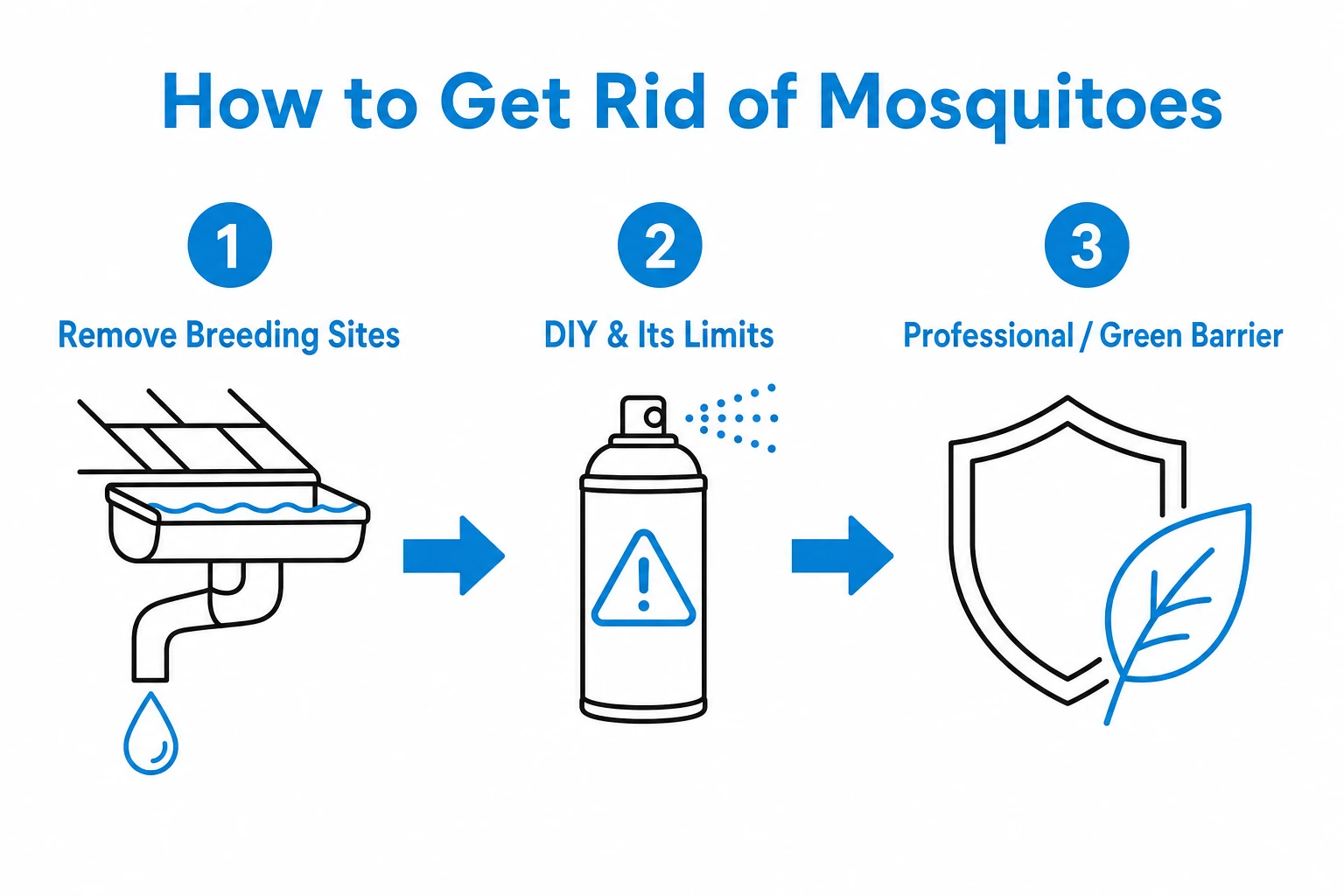
Effective mosquito control in North Carolina comes down to two phases. First, disrupt the breeding cycle by eliminating standing water on your property. Second, apply targeted treatment to shaded resting areas where adult mosquitoes hide during the day. Skipping either step leaves the problem half-solved. Most homeowners who struggle with mosquitoes are addressing only one phase, or neither.
Step 1: Remove Breeding Sites Around Your North Carolina Yard
Mosquitoes need as little as half an inch of standing water to lay eggs. That means common yard features become prime breeding habitat without you realizing it.
Common mosquito breeding sites to check:
- Clogged gutters holding water after rain
- Flower pot saucers, bird baths, and decorative pots
- Tarps, pool covers, and flat roofing with pooled water
- Children’s toys, wagons, and lawn equipment left outside
- Low-lying areas in the yard that collect runoff
- Ornamental ponds without moving water or fish
Walk your property after every significant rainfall and empty any containers that have collected water. For water features you want to keep, such as bird baths or decorative ponds, change the water every three to four days or introduce mosquito dunks containing Bacillus thuringiensis israelensis (Bti), a naturally occurring bactericide that targets mosquito larvae without harming people, pets, or beneficial insects.
For more detail on what may be drawing mosquitoes to your specific yard, see what is attracting mosquitoes to my North Carolina yard.
Step 2: DIY Mosquito Control and Its Limits
Once breeding sites are reduced, many homeowners turn to DIY treatments to manage adult mosquito populations. Some options work better than others.
What DIY mosquito control can do:
- Fans on patios. Moving air makes it harder for mosquitoes to fly and land. This is a low-cost, chemical-free way to protect small outdoor spaces.
- Removing leaf litter and overgrowth. Mosquitoes rest in cool, shaded vegetation during the day. Keeping shrubs trimmed and clearing leaf debris reduces harborage areas significantly.
- Personal repellents. EPA-registered repellents containing DEET, picaridin, or oil of lemon eucalyptus are effective for individuals during outdoor activity.
- Mosquito-repelling plants. Plants like citronella, lavender, and basil have some evidence behind them, but their range is limited to a few feet and they should not be relied upon as a primary control strategy.
What DIY mosquito control cannot do: store-bought sprays and foggers provide short-term knockdown of adult mosquitoes in a given area, but they do not address larvae or eggs, and they rarely penetrate the dense vegetation where resting adults hide. Without repeat applications timed to the mosquito lifecycle, pressure on your yard rebounds quickly, especially during North Carolina’s long mosquito season. For a broader overview of how to keep mosquitoes away without relying solely on chemical treatments, visit how to keep mosquitoes away.
Step 3: Professional and Green Mosquito Control in North Carolina
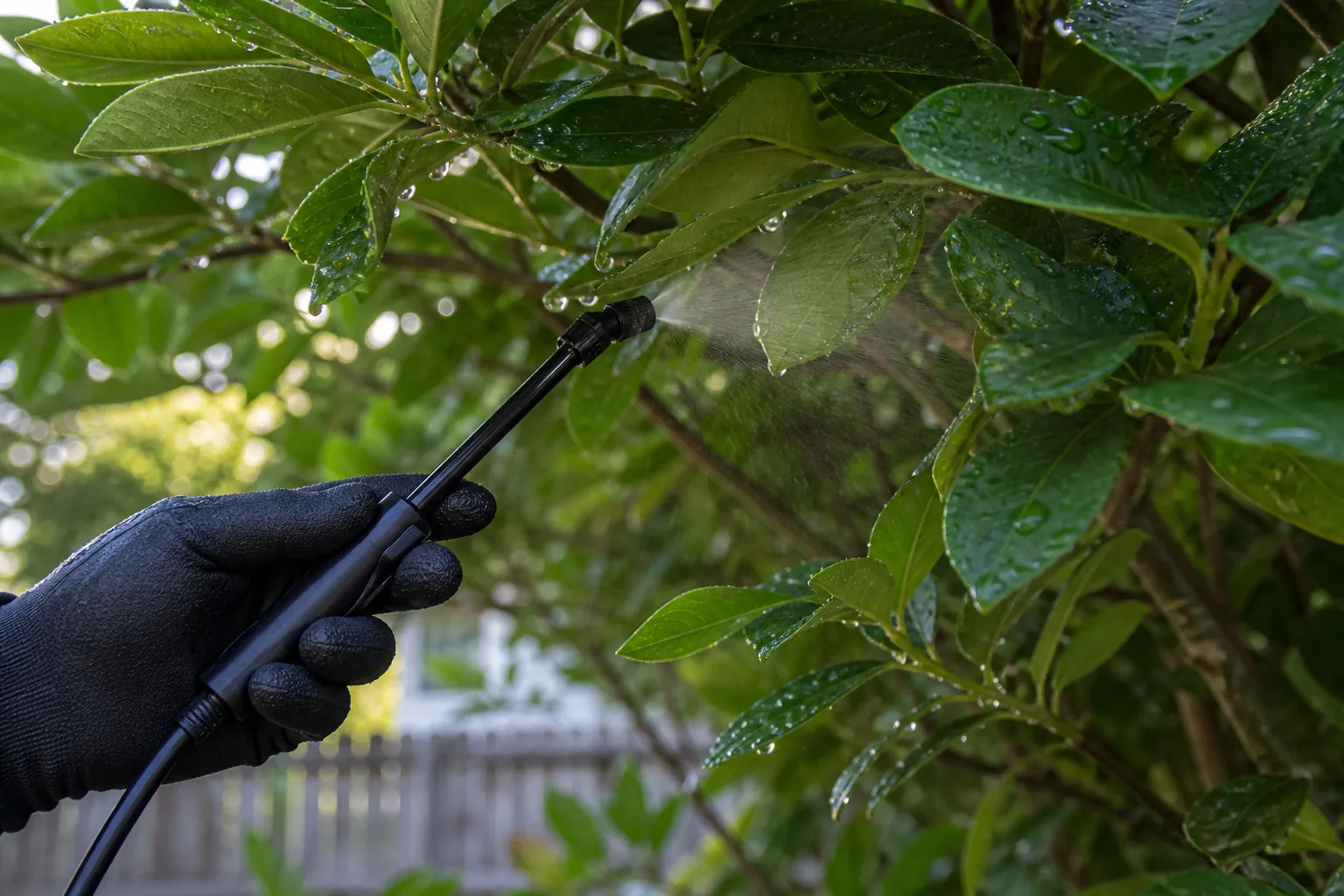
Professional mosquito control services target both adult resting populations and active breeding sites with equipment and timing that DIY products cannot replicate. For North Carolina homeowners seeking effective mosquito control, there are two main service categories to understand.
Conventional professional mosquito treatments
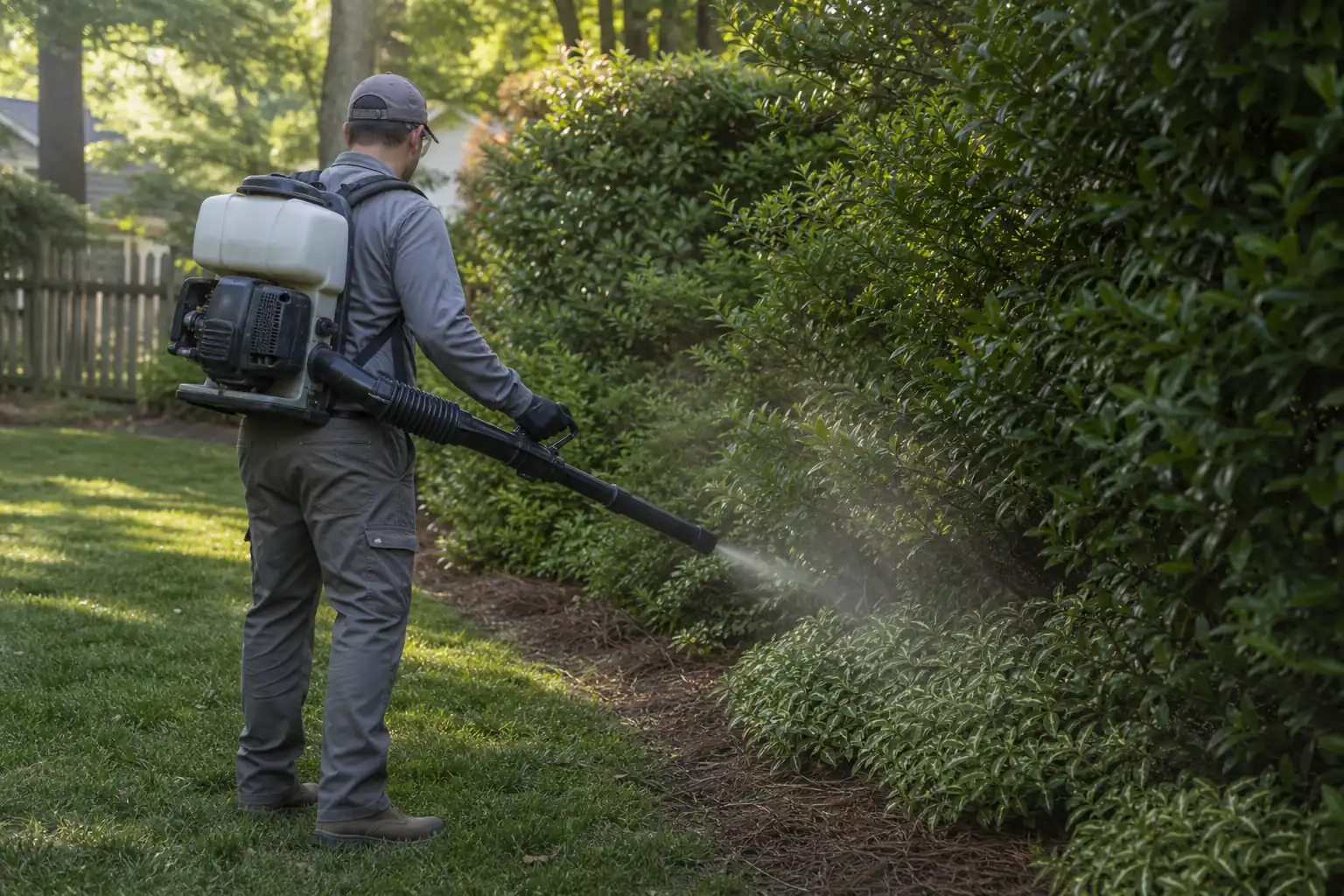
Standard professional mosquito treatments involve applying EPA-registered insecticides to the underside of leaves, around shrubs, along fence lines, and in other shaded resting zones where adult mosquitoes shelter between feedings. Treatments are typically scheduled every 21 days throughout the active season, with technicians adjusting product selection and application areas based on site conditions.
Botanical and green mosquito control options
Carolina Pest offers a botanical mosquito control option for homeowners who prefer a reduced-chemical approach. These treatments use plant-derived active ingredients, primarily essential oils such as cedar oil, rosemary oil, and peppermint oil, to repel and kill mosquitoes on contact.
Green mosquito control is genuinely effective when applied correctly and on a consistent schedule. It works best when combined with thorough source reduction (eliminating breeding water) and is an especially strong fit for households with children, pets, or a preference for lower-chemical environments. It is worth being transparent: botanical treatments may require slightly more frequent application than conventional products to maintain comparable protection, particularly during peak summer months. Your Carolina Pest technician can help you decide which approach fits your yard, lifestyle, and tolerance level.
“Most people are surprised by how many resting sites we find on a first visit. Dense ornamental shrubs right along the back patio are almost always the biggest contributor. Once we treat those zones and help the homeowner clear a few water sources, the difference is noticeable within days.”
David Craig Jr., Service Supervisor, Carolina Pest, Monroe, NC
Does Professional Mosquito Control Work?
This is one of the most common questions homeowners ask before committing to a service plan. The short answer is yes, when applied correctly and consistently.
NC State Extension’s integrated pest management research supports a layered approach: source reduction combined with targeted adulticide treatments produces measurably better outcomes than either strategy alone. Professional-grade products penetrate vegetation more effectively than consumer foggers, and trained technicians know where to look for resting sites that most homeowners miss.
“We treat very differently from a homeowner with a store-bought fogger. We are getting into the leaf canopy, under decks, along the shaded fence line. That is where the mosquitoes are sitting during the day, and that is what makes the difference.”
Carolina Pest Management Team
Results vary by property, but customers who maintain a consistent treatment schedule throughout the season report substantially reduced mosquito pressure compared to untreated neighbors. For a full breakdown of what to expect, see Carolina Pest mosquito control services.
| Control Method | Effectiveness | Duration | Best For |
|---|---|---|---|
| Removing standing water | High (breeding reduction) | Ongoing | All homeowners |
| DIY sprays and foggers | Low to moderate | 1 to 3 days | Spot relief only |
| Mosquito dunks (Bti) | High (larvae) | 30 days | Standing water you cannot remove |
| Professional conventional treatment | High | 21 days | Yards with heavy pressure |
| Professional botanical treatment | Moderate to high | 14 to 21 days | Low-chemical households |
North Carolina’s Long Mosquito Season Means Ongoing Control
Mosquito season in North Carolina typically runs from April through October, with peak activity in the warmest and most humid months, June through September. The Charlotte and Piedmont regions, given their geography and summer rainfall patterns, tend to experience some of the most sustained mosquito pressure in the state.
A single treatment early in the season will not carry you through summer. Mosquitoes that migrate from neighboring properties, breed in overlooked water sources, or emerge from eggs laid before treatment can re-establish pressure on your yard within weeks. The most effective mosquito control in North Carolina is scheduled, not reactive. Homeowners who treat on a regular interval, rather than waiting until the problem is noticeable, maintain far better control throughout the season.
For a detailed breakdown of when mosquito activity peaks in your area, visit mosquito season in NC.
When to Call Carolina Pest for Mosquito Control
DIY efforts are worth attempting, and source reduction should always be your first step. But there are situations where professional help is clearly the better call:
- You have removed standing water and mosquitoes remain heavy.
- You have yard features (dense landscaping, a natural area, a pond) that make source reduction difficult.
- You are planning an outdoor event and need reliable protection beforehand.
- You have young children, elderly family members, or immunocompromised individuals who are at higher risk from mosquito-borne illness.
- You want season-long protection without managing it yourself.
Carolina Pest has served the greater Charlotte and Piedmont NC area since 1939. The team offers both conventional and botanical mosquito control programs, free inspections, and flexible scheduling throughout the mosquito season.
- Request a Free Inspection
- See Carolina Pest Mosquito Control
- Call 704-283-1527. Trusted across the Charlotte region since 1939.