

What Are Bed Bugs? Identification, Signs & What to Do Next
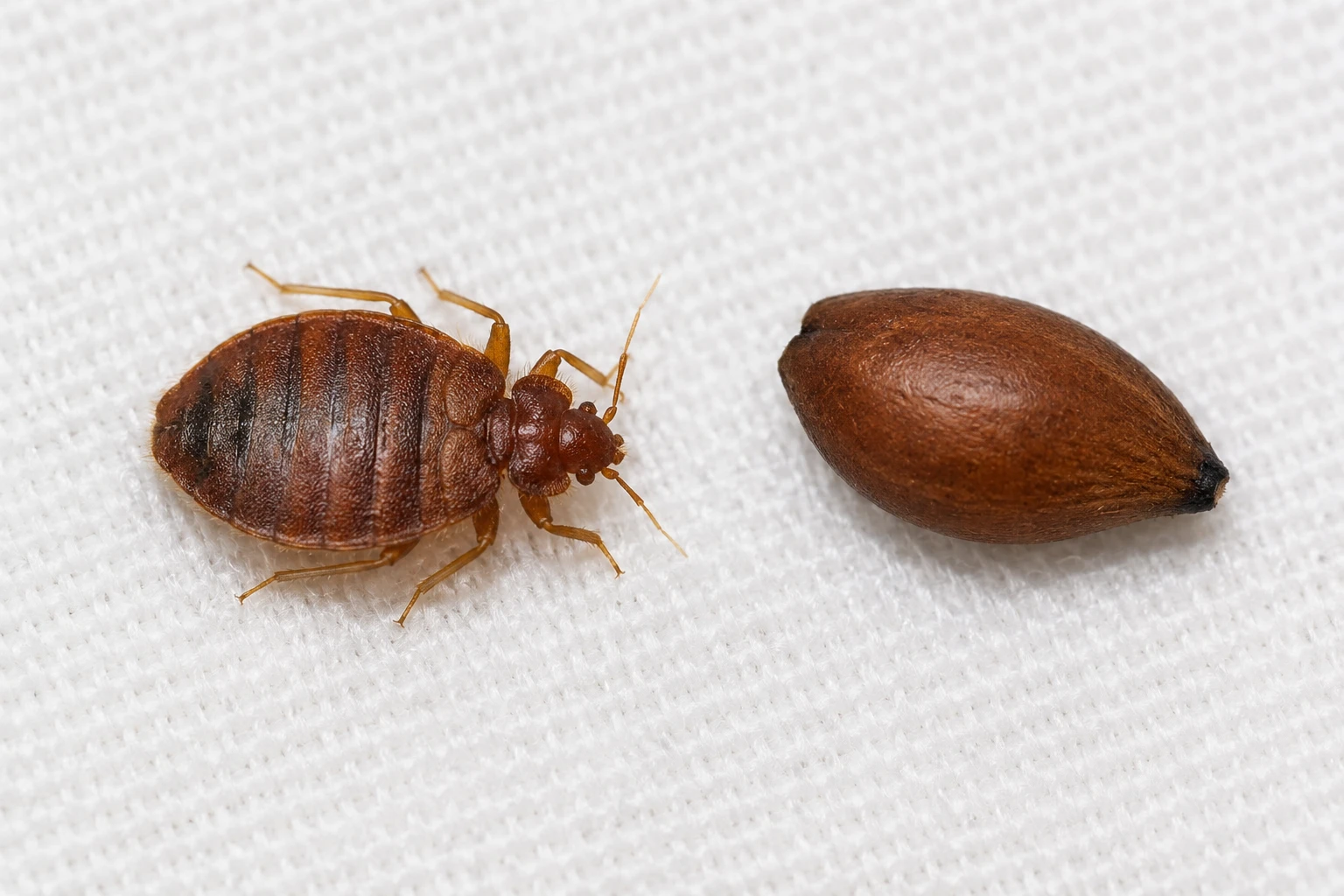
What Are Bed Bugs?
Bed bugs are small, flat, reddish-brown insects that feed on human blood and hide in bedding, furniture, and cracks during the day. Scientifically they are Cimex lectularius, and they rely on blood meals to survive and reproduce. They are entirely nocturnal. During the day they stay out of sight, then come out at night when their hosts are asleep. They find you by sensing the carbon dioxide you exhale and the body heat you give off. An adult is about the size and shape of an apple seed, small enough to miss but big enough to see without a magnifier.What Do Bed Bugs Look Like?
Proper identification is the first step, because people often confuse bed bugs with fleas, carpet beetles, or young cockroaches.Physical Characteristics
Adults are oval and, before feeding, almost paper-flat, which lets them squeeze into tight crevices. They are light to dark reddish-brown with six legs.Before and After Feeding
Their look changes after a blood meal. A fed bed bug swells up, its body lengthens and turns more cylindrical, and the color deepens to a dark red or purplish shade as it digests.Lifecycle Stages
- Eggs: Pearl-white and about the size of a pinhead. Sticky, and usually clustered in deep crevices.
- Nymphs: Pale, translucent yellow and hard to see until they feed, at which point they turn bright red.
- Adults: Mature reddish-brown insects capable of laying hundreds of eggs over a lifetime.
Where Do Bed Bugs Come From?
A common myth is that bed bugs are drawn to dirt or poor housekeeping. They are not. They only care about being near a blood source. The real question is how people move them around:- Travel: Hotels, motels, and vacation rentals are major transfer points. Bugs crawl into luggage, backpacks, and clothing left on the floor or bed.
- Secondhand furniture: Bringing in a used couch, mattress, or nightstand without a careful inspection can introduce a hidden colony.
- Multi-unit housing: In apartments and condos, bed bugs travel through wall voids, outlets, and shared spaces from one unit into a clean one.
- Public spaces: Less common, but they can hitch a ride from theaters, transit seating, and offices.
Signs of a Bed Bug Infestation
You will usually notice the signs before you see a live bug. Watch for:- Bite marks: Small, itchy red welts on exposed skin (arms, shoulders, neck, legs), often in clusters or zig-zag lines.
- Blood spots: Tiny rust-colored dots on sheets, pillowcases, or pajamas, left when a fed bug is crushed in your sleep.
- Dark fecal stains: Small brown or black spots, like marker bleeds, along mattress seams, the box spring, and the bed frame.
- Shed skins: Pale, hollow exoskeletons left behind as nymphs molt.
- Musty odor: A large colony gives off a smell some people describe as damp towels or overripe raspberries.
Where Do Bed Bugs Hide?
Bed bugs are experts at hiding close to where you sleep.Mattresses and Box Springs
This is their first choice. They gather along the piping, seams, and tags of the mattress, and the hollow box spring gives large clusters a dark place to lay eggs.Bed Frames and Headboards
Wooden headboards with carvings or cracks offer great cover. Bugs also tuck into screw holes and frame joints.Upholstered Furniture
If you nap on the living room sofa, the bugs will follow. They hide in cushion seams, under skirts, and around the springs.Cracks and Outlets
In heavier infestations they spread to the room’s edges, hiding behind loose wallpaper, inside outlets, under carpet edges, and in baseboard cracks.Are Bed Bugs Dangerous?
When people find bed bugs, their first worry is usually health. The reassuring part is that bed bugs are not known to spread disease to humans, a point confirmed by health and environmental authorities like the EPA. They still cause real problems, though:- Itching and secondary infections: Bites itch, and scratching can break the skin and lead to bacterial infections.
- Allergic reactions: Some people react strongly to the bites, with swollen welts that may need medical care.
- Sleep disruption: The stress of an infestation often causes insomnia and anxiety, which wears on you over time.
How Bed Bug Infestations Spread
Bed bugs succeed through hitchhiking and fast reproduction. A single pregnant female can lay up to 500 eggs in her lifetime. She can ride from a hotel room into your suitcase and then into your bedroom, and once established, the colony multiplies quickly. When one room gets crowded, the bugs simply move under the door or through the wall into the next bedroom.How to Prevent Bed Bugs
Stopping bed bugs before they settle in is the best strategy. Build these habits:- Inspect luggage after travel: Unpack in the garage or laundry room, then wash and dry everything on the highest safe heat setting.
- Check hotel rooms: Pull back the sheets and inspect mattress seams and the headboard for dark stains or shed skins. Keep luggage on a rack, not on the floor or bed.
- Avoid used furniture: Never bring in discarded mattresses or upholstered pieces, and inspect secondhand wooden furniture with a flashlight first.
- Use mattress encasements: Tear-resistant mattress and box spring encasements trap any existing bugs inside and remove future hiding spots.
What to Do If You Have Bed Bugs
If you confirm bed bugs, your first moves matter. Do not reach for over-the-counter foggers or bug bombs. They do not work on bed bugs and often scatter them deeper into walls and into other rooms. Do not move infested items either. Dragging a mattress through the hallway drops eggs and live bugs along the way. Leave everything where it is and call a professional quickly. Because bed bugs hide so well and breed so fast, this is not a problem internet remedies solve. Prompt professional treatment is the reliable path.Professional Bed Bug Treatment Options
Licensed treatment gives you a thorough, lasting result because professionals know where to look and how to reach hidden colonies in wall voids.Inspection Process
A technician does a careful visual inspection of bedrooms, living areas, and furniture to map the full scope of the infestation and choose the right protocol.Treatment Methods
- Heat treatment: Industrial heaters raise the room to a temperature that kills every life stage, including hard-to-kill eggs.
- Targeted applications: Commercial-grade liquid and dust products go directly into the cracks, crevices, and baseboards where bugs hide.
- Integrated pest management: Combining physical removal, heat, and targeted applications gives the most complete result.
Why Full Eradication Matters
Missing a single pregnant female or one cluster of eggs means the infestation comes back in a few months. Professional treatment is built to eliminate the whole colony so you can sleep easy again.Bed Bug Control in the Charlotte Region
Homeowners across the Charlotte area face a steady bed bug risk for a few reasons. The region’s busy travel, large student and rental population, and dense multi-unit housing across Charlotte, Rock Hill, Fort Mill, and Concord all help hitchhiking pests spread. Our mild Piedmont climate keeps bed bugs active indoors year-round rather than just seasonally, so partnering with a local team that knows regional pest behavior makes a real difference.Get Help With Bed Bugs Today
Do not give nocturnal pests another night. If you see bite marks, blood stains, or shed skins, act quickly to stop the spread. At Carolina Pest, we have helped Charlotte-area families since 1939, and our licensed technicians provide thorough inspections, fast response, and treatment plans built for lasting results.- Schedule a Free Bed Bug Inspection
- Learn About Our Bed Bug Control Services
- Serving Charlotte and surrounding NC and SC. Call 704-283-1527 for fast service.
Related Posts

Bed Bug Bites vs Mosquito Bites: How to Tell Them Apart
November 17, 2022
By Tim Rodgers, Area Technical Leader — Northwest Family of Brands · Last updated: August 2026 Quick answer: Bed bug bites usually appear in tight clusters or lines on skin that was...

A Traveler’s Guide to Bed Bug Prevention
November 15, 2022
Drawn to areas where humans live, bed bugs are savvy hitchhikers who can travel long distances and go months without feeding. Because of this, even high-end hotels and lodging options are at...